icon
ASK AN EXPERT: 1-800-451-1411

Tahitian Pearls - 3 Things You MUST Know


Key Takeaways

    • Tahitian pearls are naturally black pearls,farmed in the tropical islands of French Polynesia
    • Tahitian pearls are not truly black, but come in a wide range of natural dark colors and overtones.
    • Overtone is one of the most important visual characteristics, with peacock and green being especially prized.
    • No two Tahitian pearls are exactly alike, making each piece unique.
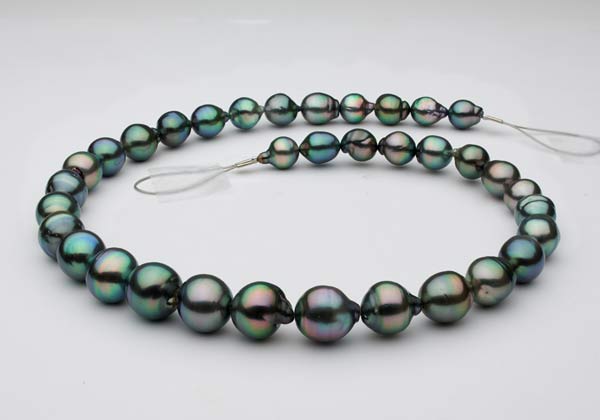
    • Baroque Tahitian pearls often have more intense overtones than round pearls.
    • Surface markings are normal, as Tahitian pearls are grown in saltwater pearl oysters and are the result of a biological process.


These exotic "black pearls" are the stuff of legend.

Just the mention of black Tahitian pearls conjures up thoughts of deep tropical waters, swaying palm trees and good men gone mad in search of them.

Below are three quick facts I think everybody should know before making the decision to purchase Tahitian Pearls.


#1 - Tahitian Pearls Are Not Grown In Tahiti


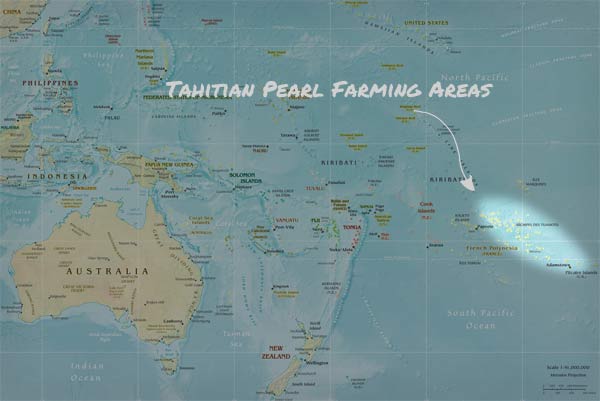
Tahiti is the main island hub of French Polynesia, but Tahiti itself does not actually produce pearls. Tahitian pearls are grown in French Polynesia, a group of 5 island archipelagos. Most of the pearl production comes from the Tuamotu Archipelago and Gambier Islands, but all pearls are then sent to Tahiti to be exported. This group of small islands covers the size the Europe, yet only has a land surface of around 1500 square miles.


tahitian pearl farming areas

*I should also note that Tahitian pearls don't come from Hawaii either, regardless what that sales clerk told you.


#2 - "Black" Tahitian Pearls Aren't Actually Black


When discussing the color of Tahitian pearls (or pearls in general) the term "black" is used to describe pearls with dark body colors. It could be blue, purple, green, brown, silver -- but never a true black.

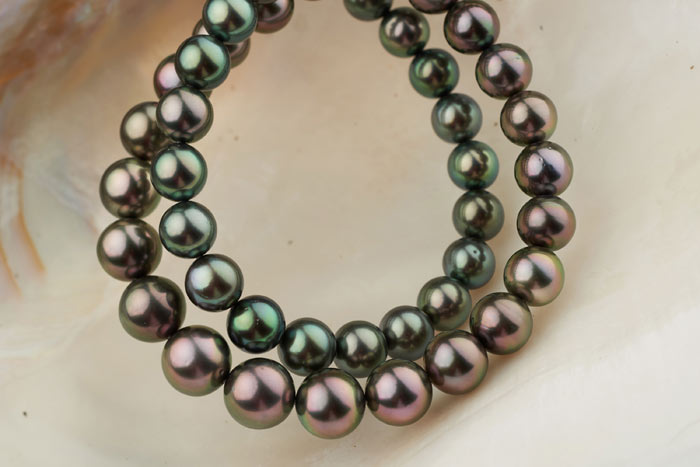
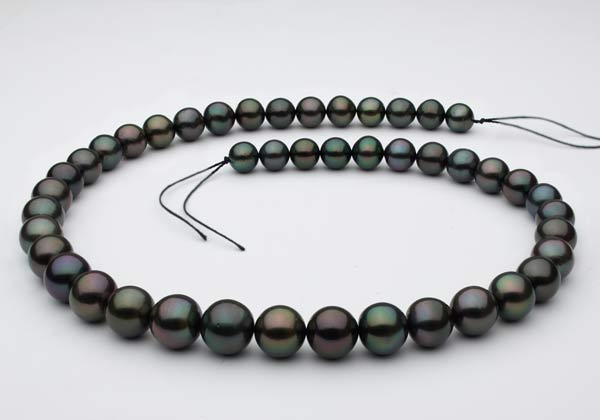
In addition to the body color, Tahitian pearls can display an amazing range of overtones (especially the circle and baroque shapes). Traditionally the most sought after (expensive) Tahitian pearls will have a dark green body color and peacock (think oil slick) overtones. Pearls that look something like this:


peacock tahitian


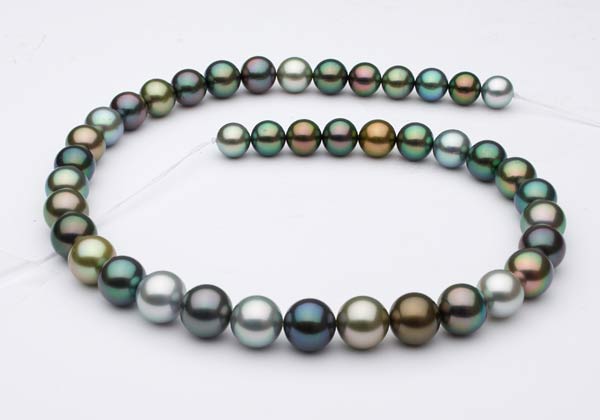
That said, in the last few years we've really seen an increased appreciation for the full range of colors possible. This multi-color strand shows how different the colors can be:


multi-color tahitians

*It's important to note that Tahitian pearls are the only naturally "black" pearls. Black Akoya and black Freshwater pearls are dyed.


Pro-Tip💡

“One of the most fascinating things about Tahitian pearls is their color. What people often think of as ‘black’ is actually a range of natural tones with incredible depth and variation.”
Kevin Canning
Founder, Pearls of Joy


Shop Our Most Colorful Tahitian Pearls

Sold out

Sold out

Sold out

📢 Read More: Tahitian Pearls 101


#3 Tahitian Pearls Come In Many Shapes (And That's A Good Thing!)

Tahitian pearls are bead nucleated. Which means the pearl farmer will very skillfully insert a round shell bead inside the oyster, with the hope that the oyster will produce a round pearl.

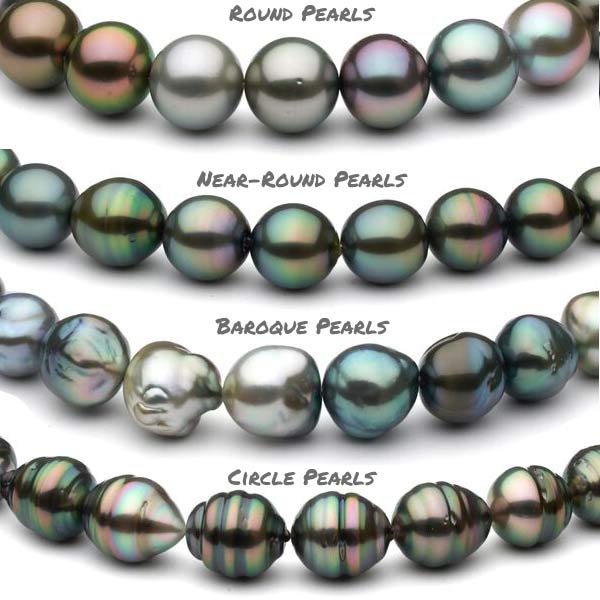
The bead DOES increase the chance of a creating a round Tahitian pearl, but mother nature is still in charge of this operation. And in fact less than 10% of harvested pearls will be round. The shapes will normally fill into 4 categories:

  • Round
  • Near Round
  • Baroque
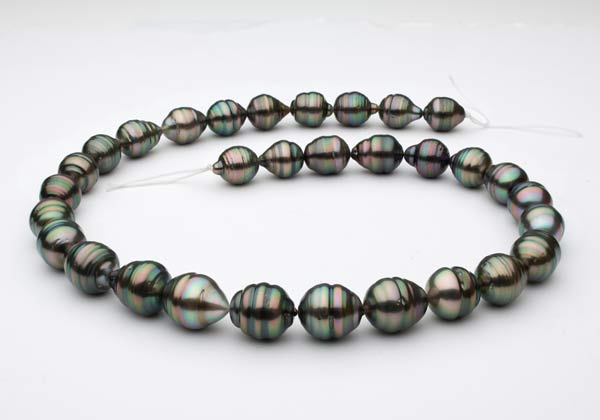
  • Circle (a type of baroque pearl)

shapes of tahitian pearls

Why You Want To Consider Baroque Pearls ...


In a word - COLOR. The shape of baroque pearls allow for light to reflect from many different angles, making overtones really pop. The most colorful strands are always the baroque and circle shaped pearls. Baroque Tahitian Pearls:


baroque Tahitian pearl necklace

"Circle" Tahitian Pearls:

circle tahitian pearls

Pro-Tip💡

“When choosing Tahitian pearls, trust your eye. Because each pearl is unique, the best choice is often the one whose color and character you personally connect with.”
Kevin Canning
Founder, Pearls of Joy


Tahitian Pearl Essentials Comparison Guide

Factor What It Means What To Look For Why It Matters Overall Importance

Color & Overtone

Primary Base Color and Secondary Hues

Strong Overtones of Peacock, Green, Blue-Green and Rose

Defines the Pearl's Beauty and Uniqueness

⭐⭐⭐⭐⭐

Luster

Brightness and Reflectivity of the Pearl

Recognize Your Face in the Surface of the Pearl, Reflected Light Sources Should be Sharp and Crisp

Luster is the Most Important Value Factor for Pearls

⭐⭐⭐⭐⭐

Surface Quality

Blemishes or Natural Growth Characteristics

Smooth, Clean Surfaces with Minimal Blemishes

Blemishes Can Mar the Surface, Impacting Beauty

⭐⭐⭐⭐☆

Shape

Round or Baroque Forms

Round or Smooth Drops for a Classic Look, Symmetrically Shaped Baroques for Modern Style and More Intense Colors

Impacts Overall Style and Price

⭐⭐⭐⭐

Size

Diameter in Millimeters

Typically 8.0-15.0mm

Larger Pearls are Rarer and More Valuable, If All Other Factors Are Equal

⭐⭐⭐

Matching

Consistency in Color, Luster, Surface Quality, Size and Shape

Uniform in Color and Luster, Size and Shape; Multi-Color Strands Should be Harmoniously Balanced

Classic Look and Style, Especially Important for Earrings

⭐⭐⭐⭐


If you found this info helpful... Leave a comment below.


Shop Tahitian Pearl Necklaces

Sold out

Sold out

Sold out

Frequently Asked Questions

Where do Tahitian pearls come from?

  • Tahitian pearls are farmed in the tropical agoons and atolls of the French Polynesian islands. The big island of Tahiti (where Tahitian pearls get their name from) is actually mainly a distribution hub - no pearls are farmed on the island of Tahiti.

  • Tahitian pearls are grown in the black-lipped oyster, Pinctada margaritifera, which is a large saltwater pearl oyster that can grow up to a foot in diameter at its largest. The black lip, or outer mantle tissue is what imbues Tahitian pearls with their trademark colors.


Are Tahitian pearls really black?

  • Yes and no. Tahitian pearls are naturally dark colored, and not dyed or color-treated in any way, but they aren't usually jet black, but come in a range of grays ranging from pale silver to very dark charcoal gray and rarely, true black.
     
  • Beyond their primary black and gray body colors are the colors that really make Tahitian pearls famous: their secondary, iridescent overtones of peacok, green, blue-green, silver, rose and more.

What is the most valuable Tahitian pearl color?

  • The most valuable Tahitian pearl color is primarily peacock, which is an iridescent mix of green, gold and rose, although there are variations. A strong, saturated peacock is shown at its best when laid over a medium to medium-dark charcoal gray body color.

  • Other famous and valuable overtones are a highly saturated blue (light or dark), intense rose and cherry, aubergine, pistachio green and natural chocolate hues.


What sizes do Tahitian pearls come in?

  • As one of the largest pearl types available, Tahitian pearls range from 8.0mm up through 15.0mm, and rarely, even larger. 

  • The most popular sizes range from 8.0-9.0mm through 10.0-11.0mm, as the pearls remain moderately sized enough for every day wear without being overpowering.


What shapes do Tahitian pearls come in?

  • There are 4 main categories of Tahitian pearl shapes: round, drop, baroque and circled baroques.

  • Round is the rarest and most valuable, while smooth drop-shaped Tahitians provide a symmetrical and romantic look. Baroque and circled baroque pearls are a modern and unique take on the classic pearl necklace.

Why are baroque Tahitian pearls more colorful?

  • Baroque Tahitian pearls are usually more colorful because the uneven and irregular layers of nacre allow for more compaction of the crystalline platelets, which can concentrate colors more intensely.

  • Circled baroque Tahitian pearls can be particularly intense in color for this reason. The varied circle formations reflect and refract light at multiple angles, deepening the appearance of saturated and vivid overtones.  

Are Tahitian pearls unique?

  • Yes, Tahitian pearls are highly unique - no two pearls are exactly alike - making each strand a one-of-a-kind creation.

  • Tahitian pearls are also unique in that they are one of the most famous naturally black pearls in the world; their rainbow of exotic colors and larger sizes make them highly covetable for pearl lovers everywhere.

Author Name

About The Author

Kevin Canning

Founder of Pearls of Joy, is recognized as one of the world’s foremost pearl experts. For over 20 years, he’s sourced rare and exotic pearls for discerning collectors worldwide. A GIA-certified Pearl Specialist, co-founder of Pearl-Guide.com, and co-creator of the CPAA’s Pearls As One course, Kevin’s expertise has earned features in Forbes and appearances on major TV shows like The Today Show. Globally trusted for his exceptional quality and commitment to fair pricing, Kevin remains a leading authority in the world of fine pearls. View Our Best Selling Collection

Sign Up for Instant Savings!

Get it Quick

Free 2-Day FedEx on all orders within the USA. Overnight delivery options start at $35.

Orders Ship Fast

Most orders ship within 1-2 business days, sometimes same day.

We Ship Worldwide

International shipping is affordable and fast. Most international packages arrive in 2-4 business days.

Worry Free Delivery

Your package is fully insured. If your order is lost or stolen before delivery, we got you covered.

Pearls of Joy markup is typically 1.4x

Traditional retail markup is 8-10x