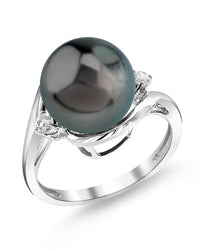
This group of small islands covers the size the Europe, yet only has a land surface of around 1500 square miles!
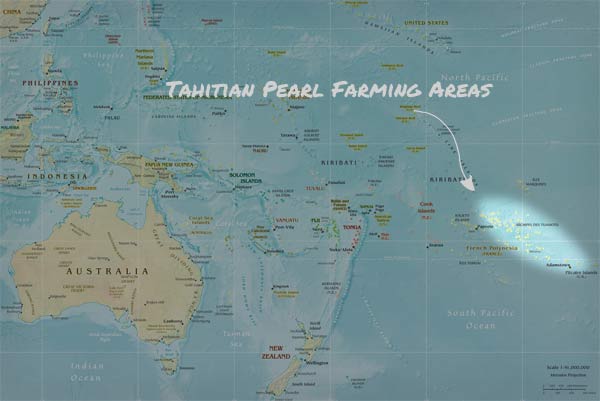
*I should also note that Tahitian pearls don't come from Hawaii either, regardless what that sales clerk told you.
#2 - "Black" Tahitian pearls aren't actually black
When discussing the color of Tahitian pearls(or pearls in general) the term "black" is used to describe pearls with dark body colors.
It could be blue, purple, green, brown, silver -- but never a true black.
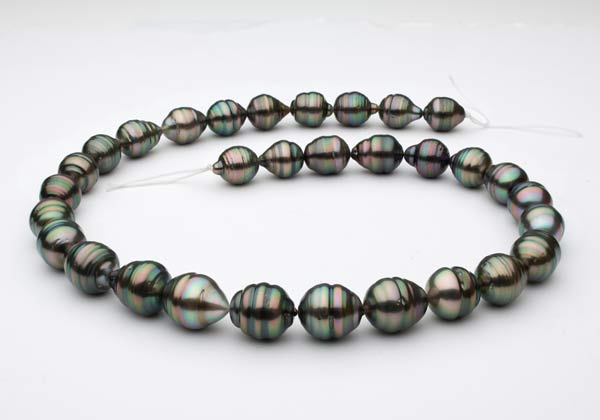
In addition to the body color, Tahitian pearls can display an amazing range of overtones(especially the circle and baroque shapes).
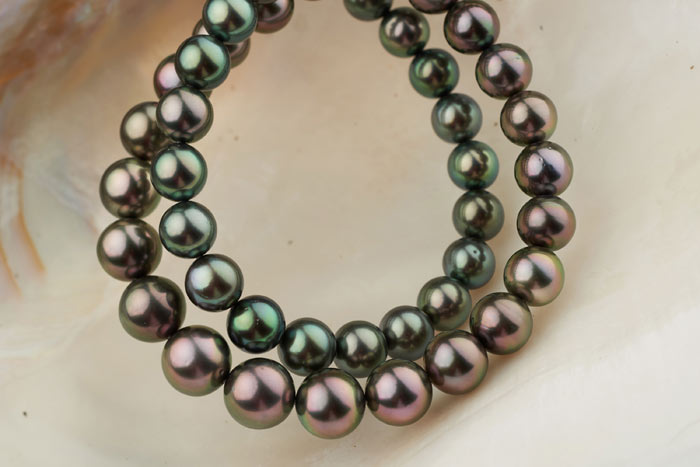
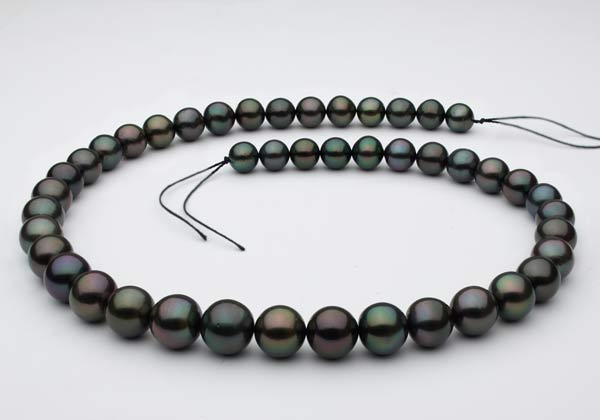
Traditionally the most sought after(expensive) Tahitian pearls will have a dark green body color and peacock(think oil slick) overtones.
Pearls that look something like this:
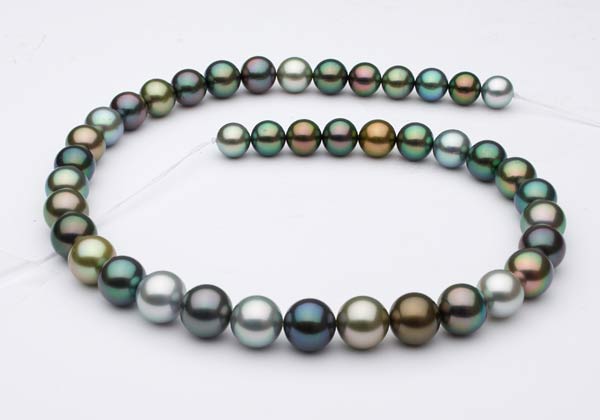
That said, in the last few years we've really seen an increased appreciation for the full range of colors possible
This multi-color strand shows how different the colors can be:
*It's important to note that Tahitian pearls are the only naturally "black" pearls. Black Akoya and black freshwater pearls are dyed.
#3 Tahitian pearls come in many shapes (and that's a good thing!)
Tahitian pearls are bead nucleated.
Which means the pearl farmer will very skillfully insert a round shell bead inside the oyster.
With the hope that the oyster will produce a round pearl.
The bead DOES increase the chance of a creating a round Tahitian pearl, but mother nature is still in charge of this operation.
And in fact
less than 10% of harvested pearls will be round.
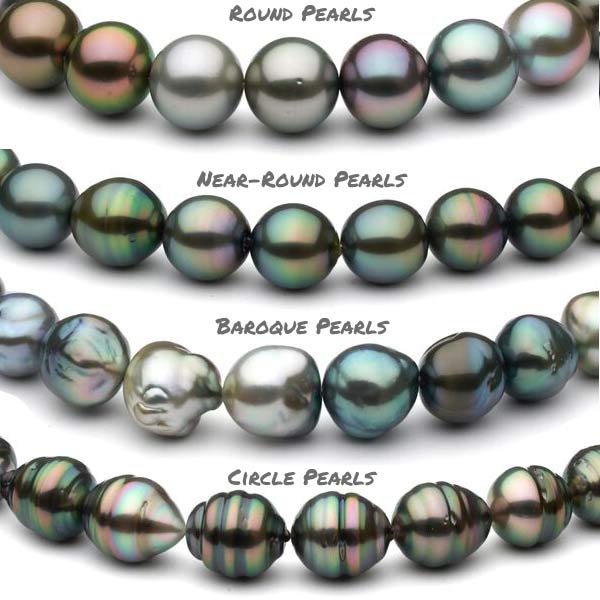
The shapes will normally fill into 4 categories:
- round
- near round
- baroque
- circle (a type of baroque pearl)
Why you want to consider baroque pearls....
In a word - COLOR!
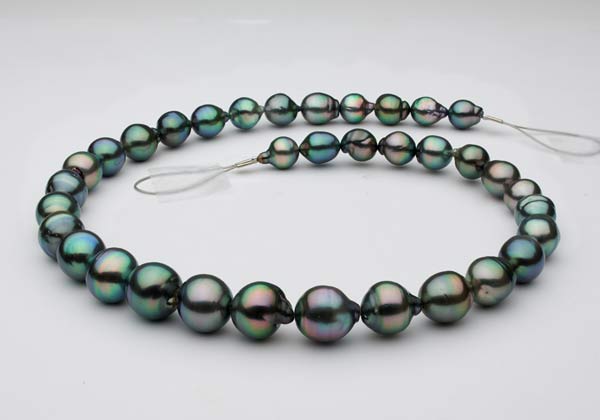
The shape of baroque pearls allow for light to reflect from many different angles, making overtones really pop.
The most colorful strands are always the baroque and circle shaped pearls.
Baroque Tahitian Pearls:
"Circle" Tahitian Pearls:
If you found this info helpful... Leave a comment below.